“Black Widow” – Spoiler Review

Black Widow

“Black Widow” was directed by Cate Shortland and stars Scarlett Johansson as Natasha Romanoff/the Black Widow in her journey to face her past after the events of “Captain America: Civil War.” She is joined by former Widow Yelena Belova, played by Florence Pugh. David Harbour, Rachel Weisz, and Ray Winstone co-star.

Black Widow MCU

Starting positively, Black Widow is one of the MCU’s best heroes and is great in this film, largely due to Johansson’s performance. However, the character was written much better in “The Avengers” and “Captain America: The Winter Soldier.” Scarlett Johansson isn’t the only actor who delivered a great performance. In particular, Florence Pugh was extremely likeable as the sarcastic Yelena Belova, and David Harbour was hilarious in his role as Alexei/the Red Guardian. I also appreciated that the film had a relatively dark tone. The MCU movies are normally too lighthearted except for “Captain America: The Winter Soldier,” “Captain America: Civil War,” “Avengers: Infinity War,” and parts of “Avengers: Endgame.” Possibly my main concern going into the theater was the tone, and thankfully the film knew it needed to be grim (for an MCU Disney movie).

Something that stood out to me was the perfect opening credits sequence. It showed the process of young girls being taken away from their families and brainwashed into becoming Black Widows by using different filters, footage, pictures, and a great music cover. It felt very David Fincher-esque, like the opening credits in “The Girl with the Dragon Tattoo” (which has my favorite opening credits sequence of all time). Fincher is the best at crafting opening credit sequences, so the filmmakers drew inspiration from the right place.

Black Widow Opening Credits
STILL OF OPENING CREDITS SEQUENCE

Despite these aspects, I found the film to be extremely disappointing. This is largely due to the poor screenplay. The reason it was so bad was because it was written by two groups of people: incompetent writers and an MCU regular. The incompetent writers include Jac Schaeffer and Ned Benson. My theory is that they’re responsible for all the plot holes, mainly because Schaeffer was the showrunner of “WandaVision,” which was 1 half of a good show and 1 half of a complete mess. Eric Pearson is the MCU regular, and I theorize he was the main culprit of the film’s story issues. He wrote “Thor Ragnarok” which, while good, was a silly, formulaic Marvel movie. He was simply the wrong choice to write the script, as he just maintains the bland Marvel formula that holds the film back. The film’s main problem is the annoying Marvel formula with its quips at inappropriate times and now-generic story structure.

Here’s a breakdown of some of the biggest spoiler-related flaws of the film that I spotted:

Black Widow
  • The opening scene was a lot worse than the opening credits. First of all, I hated the look of young Natasha. The dyed-blue hair makes her look like a social media influencer. The actress who played young Natasha was terrible as well. Additionally, it made no sense why the fake parents of Natasha and Yelena were speaking in perfect American accents when the whole family knew they were from Russia. The plane chase was incredibly stupid as well. A plane can not take off with a Russian Captain America (Alexei) on its wing. This is “Wonder Woman 1984” type of logic.
  • Why couldn’t Alexei break out of prison before Natasha saved him? He had super strength and the prison wasn’t equipped for him at all.
  • Taskmaster and Dreykov are some of the worst villains of the entire MCU. Taskmaster was a complete waste of potential. The character barely showcased the ability to use the fighting moves of other characters in the Marvel Universe, and I didn’t like the twist reveal that she is the daughter of Dreykov. Stereotypical Russian blockbuster villain was awful as well. Natasha was able to defeat him just by breaking her nose to lose her sense of smell, as he was mind-controlling her through his scent. How stupid is that?! Also, why couldn’t Natasha break her nose before he continuously beat her if she already knew what to do?
  • The idea that there are tens of thousands of Black Widows around the world hinders the Natasha Romanoff character. She feels a lot less special and unique because of it.
  • What are the odds of Yelena, the Black Widow with the closest ties to Natasha, being the Widow to lose the brainwashing of the Black Widow program when there are thousands of others?
  • Director Cate Shortland clearly couldn’t handle helming an action film. Every action scene is shot with shaky cam or quick-cut editing or both. Just because she doesn’t have an action background doesn’t mean she can’t still craft great action sequences. The Russo Brothers, for example, came off of directing sitcoms like “Arrested Development” and “Community” before directing “Captain America: The Winter Soldier,” and now that film is known as having the best action of any comic book movie (I clearly love that film).
Taskmaster

It’s important to mention the controversy of releasing this film after we’ve already seen Black Widow’s death in “Avengers: Endgame.” I personally don’t mind that we’re getting this film after Endgame because I’ve been waiting many years for a Black Widow film to be made, but the story they chose to pursue was the wrong one. Instead of a generic “facing one’s past” story which wastes all of the mystery surrounding Black Widow, the film should have been a story about Natasha meeting Hawkeye for the first time when she was an assassin and her road to becoming a S.H.I.E.L.D. agent. There wouldn’t have to be a backstory, allowing the character to stay ambiguous, and it would be a much more interesting and memorable film with a great character arc.

Black Widow

“Black Widow” has great performances, a needed dark tone, and is somewhat entertaining, but is ultimately a forgettable, formulaic MCU film with a disappointing story, poor direction, and plenty of plot holes. It’s not a terrible film, but it’s certainly one of the MCU’s weaker installments.

Grade: C-

MCU Infinity Saga Ranking

The Tomorrow War & No Sudden Move – Quick Catch-ups

'The Tomorrow War'

“The Tomorrow War” Review

The Tomorrow War

“The Tomorrow War” was directed by Chris McKay and stars Chris Pratt, Yvonne Strahovski, J.K. Simmons, Betty Gilpin, and Sam Richardson. In this film, soldiers from 30 years into the future travel back in time to ask the world for soldiers to help them fight the aliens that have taken out most of the humans in the future. Civilians from the present are drafted to go to the future, one being Dan Forester (Chris Pratt), a veteran and biologist. Action and chaos then ensues.

This film is expertly directed. It looks absolutely stunning. The action sequences are gripping throughout the whole movie, as they’re filmed with wide shots and plenty of energy & tension. You really feel like you’re one of the soldiers fighting this impossible battle. The CGI, sound design, and creature design are all spectacular as well. The aliens are original and terrifying.

The Tomorrow War

The first 40 minutes of this film are nearly perfect. They do such a great job of setting up the dire stakes and when the action starts, it’s pulse-pounding. The filmmakers also did a great job of including realistic violence in a PG-13 movie while avoiding the R rating. It’s hard to do without excessive shaky cam or cut-aways, but “The Tomorrow War” did it.

The Tomorrow War Review

Although this film is a ton of fun, it has a ton of plot holes and script issues. Not only does the film not end when it should, but the last 30 minutes made the first hour and a half pointless. Some of the most obvious plot holes I found were:

  • How were people in the future able to build a time machine if they were busy trying to survive an alien invasion?
  • Why did the future military only send people back in time 30 years earlier? Why not 50 or 100 years?
  • Why are the people in the past in such a hurry? They have decades before the aliens come and they act like they have 1 day to live.
  • Why are the present-day soldiers trained so poorly?
  • How come people in their 50’s & 60’s are drafted?
The Tomorrow War

Despite its messy script, “The Tomorrow War” has phenomenal direction, a great lead performance by Chris Pratt, a surprising amount of heart, and mind-blowing action sequences which make it a fun summer blockbuster worth seeing.

Grade: B+


“No Sudden Move” Review

No Sudden Move (2021)

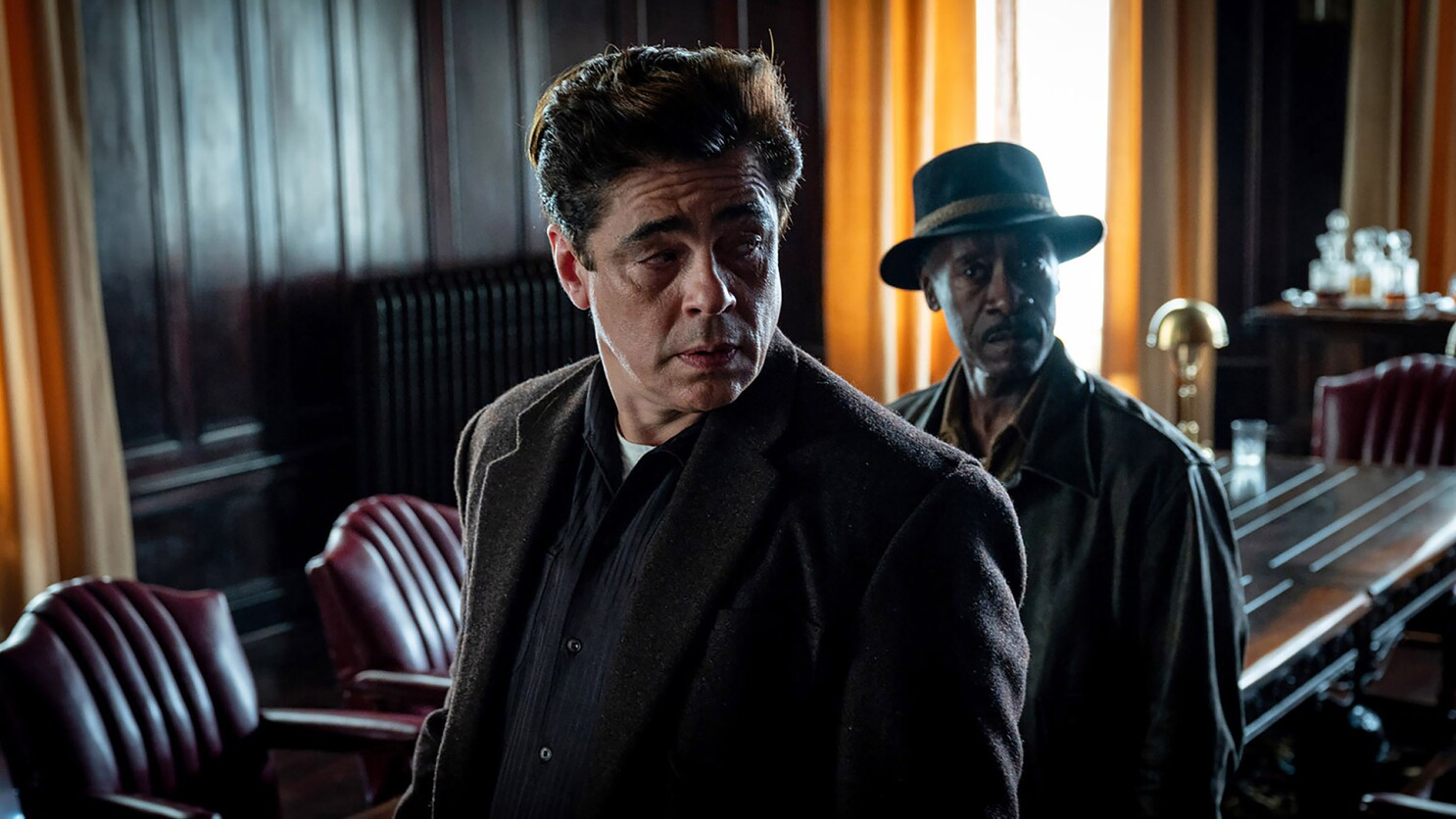
“No Sudden Move” was directed by Steven Soderbergh and was written by Ed Solomon. It has an all-star cast comprised of Don Cheadle, Benicio Del Toro, David Harbour, Jon Hamm, Ray Liotta, Brendan Fraser, Matt Damon, and many others. The film follows small-time criminals Curt Goynes (Cheadle) and Ronald Russo (Del Toro) in 1950’s Detroit as they recover from a heist gone wrong and try to find buyers for their stolen blueprint of the automobile catalytic converter. Despite all the talent in front of and behind the camera, the film didn’t work for me.

Starting with the positives, the best part of this film is the ensemble cast, as every actor gives solid performances. All the actors clearly care and enjoy playing their characters. Don Cheadle and Benicio Del Toro were particularly great. I also adored the first thirty minutes of the film, mainly because it was the actual heist itself. Soderbergh has proven himself to be a brilliant heist director in the past (“Ocean’s 11,” “Logan Lucky”), and it’s clear during that sequence. The musical score by David Holmes added a lot of tension to the scenes and captured the time period well.

No Sudden Move

Unfortunately, the film nosedives after the first thirty minutes. The script is a terrible, convoluted mess, especially for a film that’s less than 2 hours. It is tightly packed with a ton of mob characters and businessmen with 5-10 minutes of screentime and have no memorable traits. It was really hard to keep track of names, the conflicts between different characters, and motivations. Also, the plot was nearly impossible to follow. The two main characters go from place-to-place and person-to-person so many times that you just start to lose interest and become bored. The film is extremely, extremely boring.

Another negative aspect was this ridiculous fisheye camera lens that Soderbergh used.The whole screen is curved. In every scene there would be a character that looked comically skinny and all of the backgrounds looked cartoonish. This is a very ugly movie. Soderbergh was extremely pretentious in how he made the film; he went for style over substance and failed. The lens doesn’t add or relate to the story, but is rather just some strange experiment Soderbergh wanted to try.

No Sudden Move
EXAMPLE OF FISHEYE LENS

“No Sudden Move” wastes its amazing cast and becomes a boring, convoluted, overly artsy, and ugly-looking film due to its terrible script and pretentious direction.

Grade: D+

More Quick Catch-up Reviews

“F9: The Fast Saga” – A Somewhat Late Review

F9: The Fast Saga (2021) - IMDb

“F9” was directed by Justin Lin and stars Vin Diesel, Michelle Rodriguez, Tyrese Gibson, Ludacris, Jordana Brewster, and the rest of the “Fast Saga” crew. It follows Dom Toretto as he faces off against his brother (played by John Cena) and… you know the rest of the plot. Really, the film is an excuse for over-the-top action sequences and messages about family, just like the franchise’s previous installments. Some of that is a good thing, and some of that isn’t.

F9' Brings The Blockbuster Back - Box Office Mojo

“F9” succeeds as an action film, largely due to director Justin Lin’s experience in helming action. The sequences have plenty of energy and almost no overly short takes, shaky cam, or quick-cut editing. The setpieces (while incredibly stupid) are a lot of fun to watch. If you want cars crashing through buildings, people crashing through buildings, or people destroying buildings by tearing ceilings down with only their bare hands, you’ll be satisfied.

The suspension of disbelief in terms of action ebbs and flows. For example, I’m willing to suspend my disbelief to see a car strapped to a rocket engine launch into space because it’s hilarious. However, I can’t turn my brain off while watching people drop from 80 feet in the air onto the roof of a car. That isn’t entertaining or funny enough to justify itself, at least in my opinion.

F9 trailer brings Vin Diesel and his Fast and Furious crew to space -  Polygon

Something that’s always great in these movies is the chemistry/banter between the crew. Tyrese Gibson as Roman was hilarious once again, and it’s always fun to see him and Ludacris’ character argue. The cast was good all around (except for John Cena, who brought zero charisma) and everyone seemed to still care about the franchise despite doing these films for so long.

F9 Review: The Fast Saga Steers into Tedium with Lackluster Latest Adventure

The film’s main problem is the family drama. Normally it’s fun to watch Dom Toretto give his speeches about family that make no sense in these movies, but only in small doses. There must be at least 10 family monologues in this film — it becomes insufferable after a while. There are many flashbacks inserted throughout the film which are meant to give context to why Dom and his brother became estranged, so each time someone will say lines like “there is nothing more powerful than the love of family” (that’s an actual line from the movie). Speaking of Dom’s estranged brother, the film does a poor job of explaining why he was never mentioned or why he turned evil in the first place. The flashbacks explain why they don’t like each other, but there’s nothing to support Dom’s brother becoming a master assassin.

“F9” is exactly what you would expect. It’s enjoyable enough, but it lacks any real substance and it’s ultimately another forgettable film from this franchise. Plus, movies like this prevent original films from being made, so if you have to watch it, try to see it on cable for free.

Grade: C+

My Review of 1984’s “The Terminator,” a Better Action Movie

“The Terminator” – Classic Film Reviews #12

Amazon.com: (24x36) Terminator Movie Arnold Schwarzenegger with Gun 80s  Poster Print: Posters & Prints

“The Terminator” was released in 1984 and was co-written & directed by James Cameron. It starred Arnold Schwarzenegger as the Terminator, Michael Biehn as Kyle Reese, and Linda Hamilton as Sarah Connor. In case you haven’t seen it, it’s about a cybernetic organism/terminator being sent back in time to kill Sarah Connor before she becomes pregnant with her son John Connor, the future leader of the human resistance against the machines in the post-apocalyptic future. Kyle Reese is sent back in time to protect Sarah from the Terminator, and action, thrills, & tension ensue. It sounds like an overly complicated plot, but on-screen it’s fairly simple.

There Was Almost a Terminator Happy Ending – /Film

By far, the best part of this film is the action. Every single action sequence is intense and engaging. It’s all shot in an energetic style without relying on any shaky cam or quick-cut editing. James Cameron is a true master at visual filmmaking and keeping the audience on the edge of their seats for the whole runtime. Cameron maintained a fast pace throughout the film; it felt like it was only an hour long despite being 1h 45min long.

Another reason why the action is so good is the Terminator himself, who’s essentially portrayed as a horror villain. His only goal is to kill a specific target and he doesn’t care what he has to do to complete his mission. That, combined with Arnold’s imposing figure, make him legitimately terrifying. The film succeeds with flying colors at making the audience feel like the Terminator can’t be stopped as well. He constantly withstands gunfire, explosions, & car crashes and seems unphased by almost anything. There are very few villains in cinema history with that same dominating screen presence.

The Terminator (1984) Movie Review on the MHM Podcast Network

The performances are great as well. Michael Biehn added to the tension & stakes of the film without overacting, and Linda Hamilton brought a warmth & likeability to Sarah Connor which couldn’t be written. The character could have been annoying if played by a different, less talented actress, but Hamilton was not that actress.

Could Westworld ever happen? Real life robot 'hosts' are only decades away  - Radio Times

I also loved the make-up & visual effects by Stan Winston.There’s not much else I can say about him that hasn’t already been said. It’s unbelievable what he was able to accomplish, especially in 1984. Every single effect holds up.

However, the film isn’t without its flaws. There are a few plot holes in the script. For instance:

  • Why didn’t the machines send the terminator to the day John Connor was born to kill him as a baby?
  • Who built the time machine and how was it built?
  • Why didn’t the Terminator have a thermal imaging system (like the Predator in “Predator”) to allow him to catch Kyle Reese & Sarah Connor when they were hiding?
The Terminator 1984 Car Chase Scene HD Clip 13 23 - YouTube

The film also has some audio-related issues. There are some extremely obvious ADR (automated dialogue replacement) in several scenes, such as the scene in which Kyle Reese explained the future to Sarah Connor in the parking complex. Also, some of the music choices were terribly dated. Much of the music played during action scenes sounded like they belonged in an 85-minute long B-movie from the 1980’s or early 1990’s. Just because “The Terminator” was released in the ’80’s doesn’t mean some of the music had to sound like it came from “Samurai Cop.” In contrast, the actual theme for the film by Brad Fiedel was fantastic. It’s one of the most iconic scores in all of cinema history for a reason.

“The Terminator” is a great, exciting action film with impeccable pacing, good performances, thrilling sequences, stunning visual effects, excellent direction, and an extremely memorable theme. Although it has some audio issues and a few plot holes holding it back, I love this film.

Grade: A-

More Classic Film Reviews

Luca, Mortal Kombat, & More – Quick Catch-ups

Luca

Quick Review #1: “Luca”

Luca

Pixar’s newest film “Luca” is about a young boy discovering & falling in love with the surface while trying to hide the fact that he’s a sea monster. While “Luca” is a passable film overall, it doesn’t meet the standards of Pixar that we have now come to expect. The best aspect of this film is the animation — it’s spectacular. The visuals are breathtaking, especially in sequences involving water. It’a mindblowing how far animation technology has come. The film has a generic story that works well enough due to good direction and (mostly) enjoyable characters.

Unfortunately, I found the Luca character to be very annoying at times due to the voicework from Jacob Tremblay; he was unconvincing and miscast. There are also some problems with the script, specifically how many details concerning the setting of the film are left out. For example, the society and lifestyle of the sea monsters underwater are never fully explored, causing the audience to not care about the home of our protagonist.

“Luca” succeeds at telling a decent story which children can enjoy, but it ranks near the bottom of Pixar’s films.

Grade: B-


Quick Review #2: “Mortal Kombat”

Mortal Kombat

“Mortal Kombat” is one of those films which get worse and worse the more you think about it. Not only is it filled with plot holes, but it also has terrible pacing. Like “Star Wars: The Rise of Skywalker,” it moves through its events so quickly that plots points aren’t allowed to develop and the storyline becomes hard to follow. For example, the ending fight in which multiple characters are engaging in their own one-on-one battles is just a confusing montage rather than a fully realized fight sequence.

It’s important to note that this review is coming from someone who hasn’t played the video games this film is based on, but rather someone who just wanted to enjoy a fun action movie. Unfortunately, I didn’t get a fun action movie, despite this film being marketed as an action-packed, bloody rollercoaster. Almost all of the action scenes are filmed horribly. Shaky cam and quick-cut editing are used as a crutch to hide the choreography, not allowing the viewer to understand what is going on in the action scenes, and therefore making them unenjoyable.

Due to its 99-minute runtime (excluding credits), “Mortal Kombat” is a rushed mess with few memorable or likeable characters. Most of its action sequences are impossible to follow, making it fail as an action movie. Some of the performances were good, namely Joe Taslim as Sub-Zero and Josh Lawson as Kano, but this film was still a massive disappointment.

Grade: D


Quick Review #3: “Raya and the Last Dragon”

Raya and the Last Dragon

“Raya and the Last Dragon” was not at all worth the $30 price for premier access on Disney+. I found the plot to be completely uninteresting. It was overly complicated (especially for a children’s movie), generic, and extremely predictable. The film was also very boring for most of its runtime. This is partially due to the plot itself being uninteresting, but also due to its main character, Raya, being a Mary Sue. If you’re unfamiliar with that term, it means a character that lacks any flaws and is able to accomplish anything without any setbacks or difficulty. Raya was always kind, strong, and seemingly invulnerable, making her unrelatable and a little unlikable.

However, this film still has several praise-worthy elements. Firstly, the animation is gorgeous. The environments, character designs, water, and even hair are all pristine. The action sequences were phenomenal as well. The camera moved with a lot of energy during fight sequences while (thankfully) never using shaky cam.

While “Raya and the Last Dragon” is entertaining at times due to the frenetic action sequences and beautiful animation, it suffers from an unlikeable lead character and a boring storyline.

Grade: C

Quick Catch-ups: Godzilla vs. Kong, Nobody, & Thunder Force

“In the Heights” – A Somewhat Late Review

In the Heights (2021) - IMDb

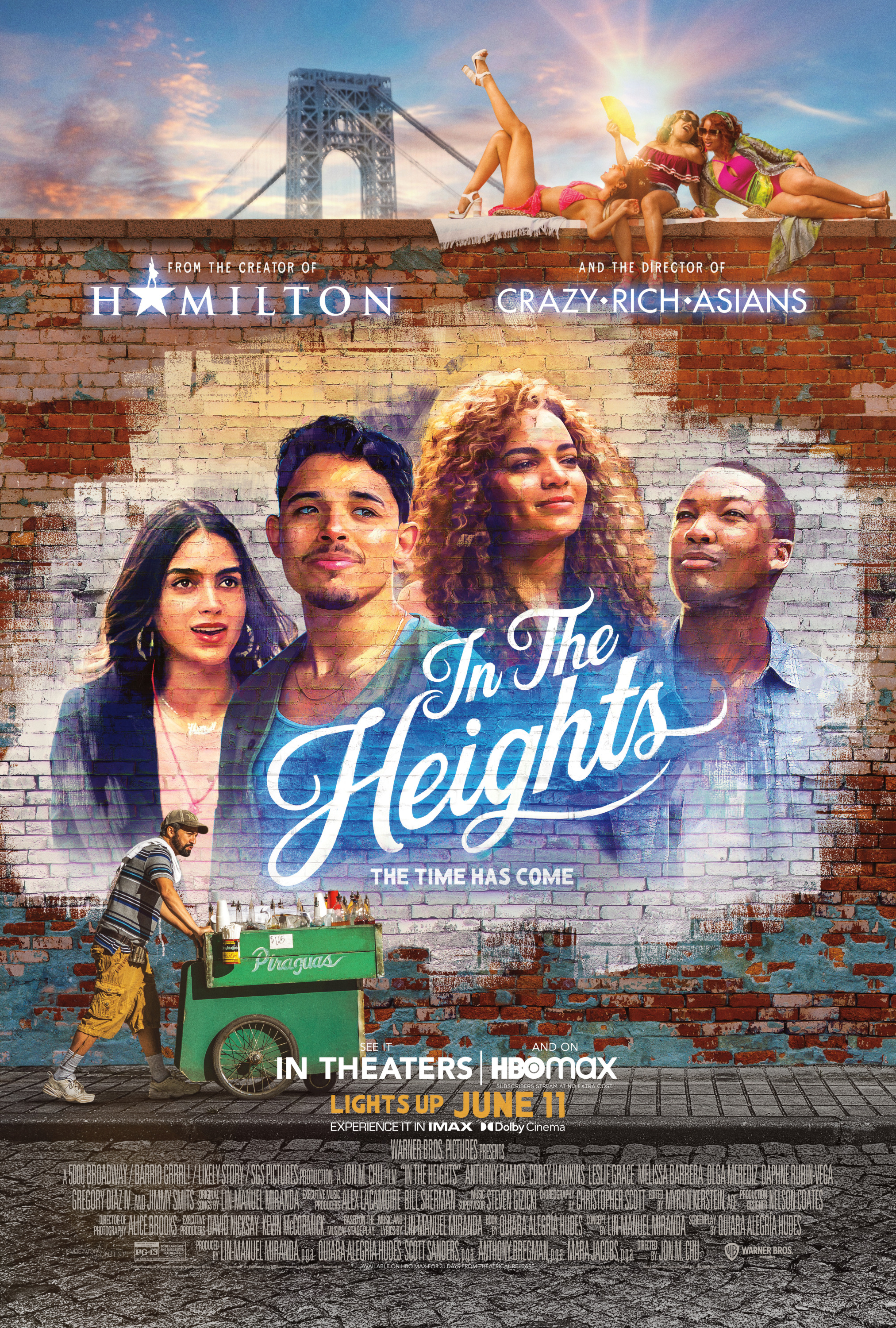
“In the Heights” is a new musical directed by Jon M. Chu and is based on the play by Lin-Manuel Miranda & Quiara Alegría Hudes. It stars Anthony Ramos, Melissa Barrera, Leslie Grace, and Corey Hawkins. The story follows a bunch of characters who live in the neighborhood of Washington Heights, but the main character & storyline is Usnavi (played by Ramos), who aspires to leave the neighborhood for the Dominican Republic.

It’s important to note that I’m not a fan of musicals. I get taken out of them once characters start singing and dancing out of nowhere. In order for musicals to really justify themselves they must have multiple fantastic songs and/or a story that is legitimately engaging. The only (live-action) musicals I actually like are “The Wizard of Oz,” “The Greatest Showman,” and “Singin’ in the Rain.” I enjoy the first two because of their abundance of memorable songs, and “The Wizard of Oz” in particular was simply a cinematic achievement. I consider “Singin’ in the Rain” to be the best musical though, as it makes sense why the characters, who are professional singers & actors in the story, break out into song. Maybe I’ll do a classic film review of it someday…

The Hamilton Easter Egg You May Have Missed in 'In the Heights' | PEOPLE.com

The overall plot of the film is quite cluttered. There are a lot of storylines going on simultaneously. Some characters want to leave the neighborhood because they have dreams of doing something else, and others are worried about family-related issues or expectations of them from others. I wouldn’t say the movie is a mess, but the reason it isn’t is because it has a 2 1/2 hour runtime. It’s really, really long, especially for such a generic story. Several storylines could have been cut to improve the film, giving it a stronger pace and a cleaner narrative. Sadly, I didn’t care about most of the characters.

In the Heights: trailer breakdown | Cineworld cinemas

The character that I liked the most was Nina (played by Leslie Grace), who struggles with the expectations put upon her by her father and others. Nina attends Stanford University, and the neighborhood, which is generally made up of people who didn’t go to college & are of lower economic status, sees her as a successful, important figure. However, she struggles to tell them that she hates Stanford and she misses the lifestyle of her former neighborhood. Nina is the most relatable character in many ways, and she also has a more realistic, non-generic storyline. Unfortunately, she is still a side character, and the story focuses on less interesting ones.

Something great about the film was the setting. Washington Heights felt lived-in and almost fantasy-like. The streets are described as being “made of music,” and you really feel that throughout the film. That’s a big compliment for director Jon M. Chu, who did a fantastic job. I’m sure directing this film was a daunting task due to its scale and the complexity of all the dance/musical sequences. From a visual standpoint, “In the Heights” is a near masterpiece.

Jon M. Chu on the Pool Scene From 'In the Heights'

As explained earlier, this film’s most important job as a musical was to provide catchy songs and exciting dance sequences. Did it accomplish that? Well…. no. Maybe some people will find the songs fun and would revisit them a lot, but I thought they were pretty lackluster. Like 2019’s “Cats,” this film has the problem where most of its songs are just people narrating what they think, what they’re doing, or simply what someone’s name is. Take some of Usnavi’s lyrics from the very first song:

“The milk has gone bad, hold up justa second. Why is everything in this fridge warm and tepid? I better step it up and fight the heat. ‘Cause I’m not makin’ any profit if the coffee isn’t light and sweet!”

“Next up, ding! Kevin Rosario. He runs the cab company,​ he struggles in the barrio. See, his daughter Nina’s off at college, tuition is mad steep. So he can’t sleep; everything he gets is mad cheap!”

In the Heights' Movie Trailer 2021: WATCH
USNAVI SINGING HIS LIFE STORY

See what I mean? Many of the songs are just lazy and underwritten, at least to me. One of the reasons why “Somewhere Under the Rainbow” from “The Wizard of Oz” is so great is that Dorothy isn’t simply singing about her thoughts directly. The lyrics are symbolic and the tune is beautiful. “In the Heights” lacks a song that even comes close to that.

“In the Heights” is a brilliantly directed film with striking visuals and a unique setting. Unfortunately, it suffers from having a generic, unoriginal story and doesn’t have enough memorable songs to justify itself being a musical. If you love musicals, I recommend you watch this film, but if you’re like me, you should skip it.

Grade for Musical Fans: B

Grade for Non-Fans: C-

“Eve” – Short Film Review

“Eve” is a new short film written & directed by Wesley Wang and stars Nikki Silva as homeless single mother Evie and Griffin Henkel as Evie’s rebellious son Leo. The film focuses on their struggle to find a job on the streets of Elmont, New York and to maintain their relationship over the course of a day. The film’s cinematography was also done by Dev Mitra, the director of the fantastic short film, “The Meadow.”

The best part of “Eve” is the visuals. Wang, Mitra, and editor Simon Wheeldon crafted a visual style that reflected the tone of the film and the tension between the characters. There are tons of beautiful and immersive shots & sequences which make the film appear larger than it actually is, which is a massive accomplishment.

The two lead performances were great as well. Child actors have a negative reputation and normally damage the immersion of a film through poor performances, but Griffin Henkel as phenomenal in the role. He never diminished the immersion of the film and was believable in the role of a troubled child with a rebellious nature and need for a new way of life. However, Nikki Silva was the actual breakout star of the film. She gave a truly devastating performance and captured Evie’s self-loathing & fear of failing her son perfectly. Much of the character’s dark backstory could be seen from her demeanor alone.

The film is not perfect, however, as the supporting characters and their dialogue was pretty hit-or-miss. Whenever the two leads were separated and they were talking to other people, the quality of the dialogue often shifted downward. Many of the supporting characters said stereotypical, cheesy things that didn’t fit the grounded tone of the film. The best examples of this are the bully characters who Leo encounters. They all talk as if they’re straight out of the films “Grease” or “Dazed & Confused” and act like they share a consciousness, similar to the Borg from “Star Trek: The Next Generation” or the agents from “The Matrix.” None of them have distinct characteristics that tell them apart. However, these characters have a small amount of screentime and didn’t hurt the film too much.

Although it suffers from underwritten supporting characters, “Eve” is beautiful in its imagery & themes and has two fantastic, compelling, and utterly human main characters. I strongly recommend it.

Grade: A-

“Dr. Strangelove” – Classic Film Reviews #11

Dr. Strangelove or: How I Learned to Stop Worrying and Love the Bomb (1964)  - IMDb

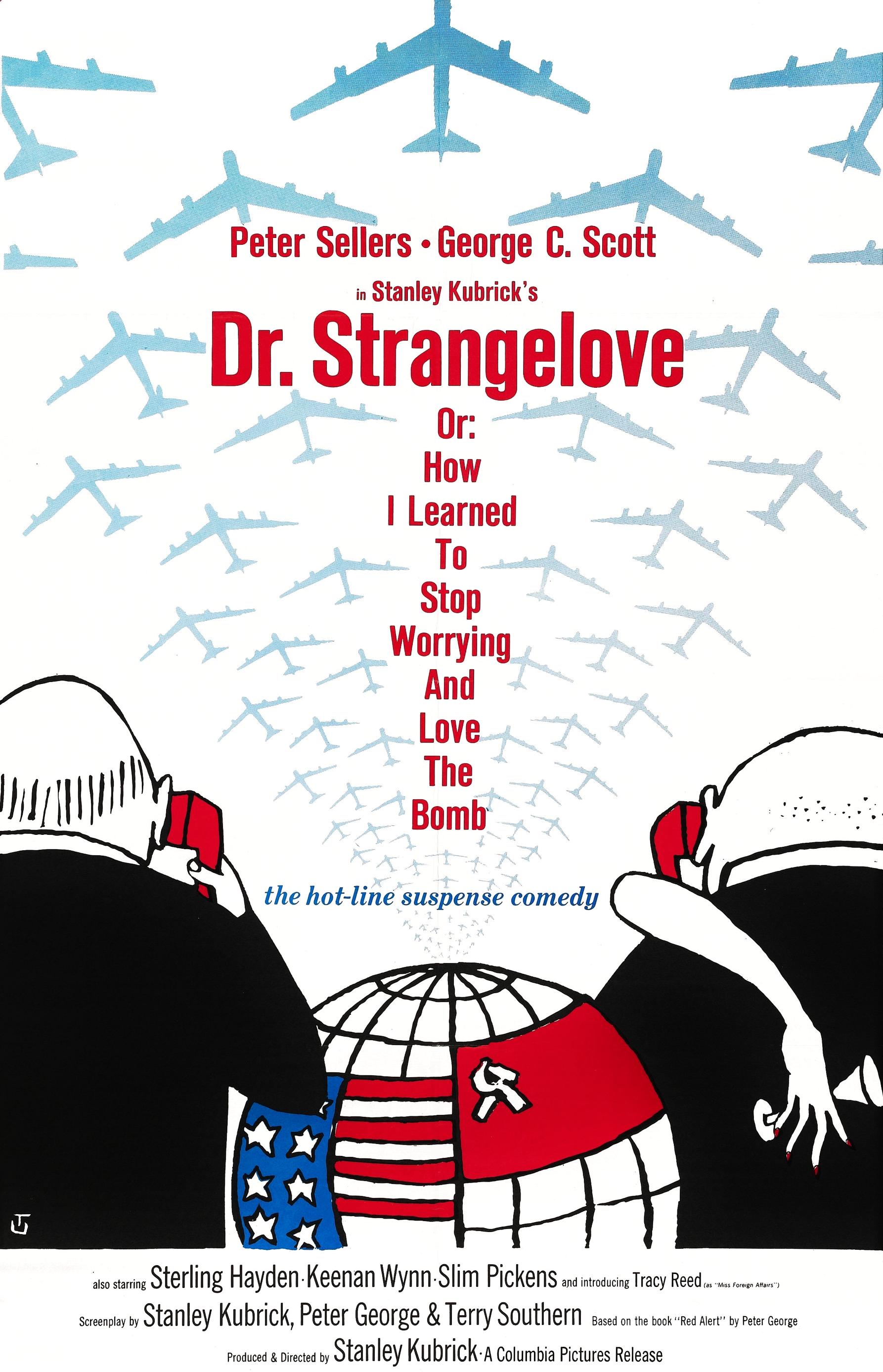
“Dr. Strangelove Or: How I Learned to Stop Worrying and Love the Bomb” was released in 1964 and was co-written & directed by Stanley Kubrick. It stars Peter Sellers in multiple roles, George C. Scott as General Buck Turgidson, and Sterling Hayden as General Jack D. Ripper. The film is a satire comedy about the nuclear arms race and what would happen if the U.S. and Soviet Union engaged in nuclear warfare during the Cold War. In the film, crazed U.S. General Jack D. Ripper organizes a nuclear attack on the Soviet Union behind the back of the President of the United States, causing the U.S. government to scramble to stop the attack before it’s too late. Despite this seemingly dark and depressing premise, Kubrick and his team were able to craft a legitimately funny film which holds up to this day.

How Peter Sellers Lost His Fourth Role in 'Dr. Strangelove' - Metaflix

Unsurprisingly to film lovers, Kubrick’s direction for this movie is phenomenal. He brought his signature beautiful all in-focus shots and iconic imagery to the film, and also was able to balance so many different themes & tones while still making the film hilarious. For example, sometimes scenes of military battles and comedic exchanges would occur back-to-back, and under most directors, this would feel jarring and unfocused, but Kubrick somehow maintained the same lighthearted tone throughout.

GEORGE C. SCOTT AS BUCK TURGIDSON

Additionally, under Kubrick’s direction, the actors in “Dr. Strangelove” gave some of the finest comedic performances in cinematic history. George C. Scott gave one of his best performances as Turgidson. He brought a heightened level of intensity and energy to the character and had over-the-top mannerisms which worked perfectly for the film. Meanwhile, Peter Sellers played three characters in the film: President Muffley, Group Capt. Lionel Mandrake, and the title character, Dr. Strangelove. With President Muffley he brought great comedic timing, with Mandrake he brought the perfect straight-man persona, and with Dr. Strangelove he brought a scene-stealing character. Speaking of Dr. Strangelove, it’s important to note that he has very few scenes in the film. The fact that his name is the title of the film is almost a joke in and of itself, though he was still a fun character.

Viewer Guide: Dr. Strangelove and The Company Men | Blog | Reel 13 |  THIRTEEN
PETER SELLERS AS DR. STRANGELOVE

The film cuts back and forth between three sections: the President with Dr. Strangelove & Turgidson in the War Room, General Jack D. Ripper and Mandrake at the Burpelson air force base, and Major Kong & his crew on an air force bomber. All three sections are enjoyable, but the scenes in the War Room are probably the best. They’re hysterical due to the dialogue and the exchanges between all of the great characters. For example, the President goes on calls with an ally in the Soviet Union named Dimitri, who feels lonely and complains that the President never calls him “just to say hello” while the Soviet Union is under threat of a nuclear bomb.

That Dr. Strangelove scene where the U.S. President phones Russia about an  imminent air strike | Boing Boing

The film is more than just a comedy, however, as it touched on the perpetuation of the Cold War, nationalism, the military-industrial complex, and other political topics. It’s also an excellent example of how to insert political messaging into a film. Kubrick put the narrative in front of the themes instead of behind them and never blatantly targeted any political affiliation, while most modern movies which try to make political statements do the opposite and end up being preachy.

“Dr. Strangelove Or: How I Learned to Stop Worrying and Love the Bomb” is a thoroughly entertaining movie which balances its important themes with its own unique style of humor. The movie is extremely rewatchable and is my favorite Stanley Kubrick film. Plus, it has the best movie trailer of all time:

Grade: A+

More Classic Film Reviews

“WandaVision” vs. “The Falcon and the Winter Soldier” – What’s the Better Marvel Series?

WandaVision vs FWS

The new Marvel series “Loki” is coming to Disney+, so I wanted to give my thoughts on the MCU’s two previous series: “WandaVision” and The Falcon and The Winter Soldier.” To determine which is superior, I’ll be covering 5 categories: Heroes/Main Characters, Villains, Story, Action/CGI, and Contribution to the Marvel Cinematic Universe (MCU) as a whole. Also, I’ll be calling “The Falcon and the Winter Soldier” FWS for the purpose of this review

SPOILER WARNING

Heroes/Main Characters: “WandaVision” started out with a disadvantage in comparison to FWS since the title characters, Wanda Maximoff and the Vision, were underdeveloped in the previous MCU movies while the Falcon and Winter Soldier both had small character arcs before their show. However, I found Wanda and Vision to be far more likeable in their show than Falcon and Winter Soldier in theirs for the most part. The character motivation for Falcon is laughably bad; the whole point of his character in FWS is that he learns to overcome his fear/skepticism of becoming the next Captain America, but he gave up the shield that the original Captain America gave to him in “Avengers: Endgame” for no good reason. Some controversy over the history of the shield is (poorly) developed later on, but that’s only after he gave the shield away to the government. Then when the government gave his shield to someone who actually appreciated the opportunity (and earned it), he is somehow surprised. Meanwhile, the Winter Soldier didn’t have much screen time and when the show had the opportunity to explore his damaged psychosis, it chose not to in order to explore a political agenda with Falcon instead. In contrast, Vision went through a wonderful arc throughout “WandaVision” in which he realized the evils Wanda was committing, and Wanda was also interesting in that her reasons for commiting said horrible acts were somewhat understandable because of how much she suffered in her past. Winner: WandaVision

Villains: Agatha Harkness was the main villain in “WandaVision” (although Wanda became a villain toward the end of the show), and while Harkness’ motivations were poorly written and unclear, she was entertaining due to Kathryn Hahn’s charismatic performance as the character. Overall, she was a mediocre antagonist. Meanwhile, FWS had two villains (because it was a jumbled mess): John Walker as the new Captain America and Karli Morgenthau. Walker was, in theory, a compelling character due to the mental scarring put on him from serving in the military, but the show forced the idea that he was a villain on us too heavily and too soon. What I mean is that Falcon and Winter Soldier both hate him at first, and the show is trying to tell us that he is the bad guy constantly, but he had too many redeeming characteristics as well as a genuine, noble desire to serve his country, so he wasn’t as villainous as the how believed he was. However, I still liked the character overall and thought that he was the best part of the show. In contrast, Karli Morgenthau was possibly the worst MCU villain ever, and that’s saying a lot, because the MCU is known for its atrocious villains. First of all, the show kept trying to promote the idea that she was doing all these violent acts for a good cause, but the cause that it keeps mentioning is never fully explored, and she lacked any legitimate motivations. Plus, unlike John Walker whose violent actions were nearly all justified since he was trying to protect people from terrorists, her actions were completely unjustified. She was blowing up buildings with innocent people in them without remorse, and somehow we’re supposed to understand her. Additionally, the actress who played her, Erin Kellyman, gave a cringe-inducing and annoying performance. She was also hilariously unintimidating due to her adolescent appearance and voice. Since Karli Morgenthau was such an abysmal character and one of the worst comic book movie/show villains of all time, “WandaVision” earns the point. Winner: WandaVision

Story: I found the first half of “WandaVision” to be extremely compelling and unique. The idea of two superheroes acting in sitcoms from different decades was brilliantly executed during the first five episode. I found myself excited to learn more about the mystery of the show as each episode progressed. However, starting at episode six, the show’s quality took a steep decline and the writing became sloppy and careless. Episodes 6 and 7 were completely pointless, and although I enjoyed episode 8 due to its character development for Wanda, the show’s finale was pretty unsatisfying, as Wanda was left alone by the government despite her basically enslaving an entire town. As for FWS, the story was a complete mess. Every character, except for John Walker, was either boring, sidelined, or ruined. Instead of making an exciting buddy-cop action/adventure series with two entertaining characters, the showrunners decided to make the show about why the previous Captain America was an oppressive figure and emphasized how Falcon wouldn’t be accepted as the new Captain America due to being African-American. Not only was that plotline executed in a preachy and overbearing way, but real-life proved that that premise was completely false. The internet went insane in its excitement for Falcon becoming Captain America, and I couldn’t find a single person who was opposed to the new Cap due to his race. I had no problem with it at all, and in fact I was ecstatic at the end of “Avengers: Endgame” when Steve Rogers, the original Captain America, gave the shield to Falcon. Also, as previously mentioned, the motivations for Karli Morgenthau and her terrorist group, the “Flag Smashers” (which is a ridiculous name), was extremely underdeveloped, which is a major problem when the show is trying to make terrorists somehow understandable. However, the worst part of FWS was that it was a major disappointment. The Captain America movies and Steve Rogers’ arc were always the most interesting to me, and I went into FWS extremely excited, but finished the show wishing I never saw it. Winner: WandaVision

Action/CGI: Almost all of the action in “WandaVision” was CGI-heavy and mind-numbing. It reminded me of the end battle in “Man of Steel,” with all the headache-inducing CGI destruction. On the other hand, FWS had decent action. In particular, the sequence in which John Walker fought Falcon and Winter Soldier was enthralling and thoroughly entertaining. The CGI in some of FWS looked a little unpolished at times, but it looked great for the most part. Winner: FWS

Contribution to the MCU: In my opinion, both of these shows hindered the overall story of the MCU. “WandaVision” revealed that Wanda can literally create new life like she did with Vision, so it raises questions as to why she didn’t bring her brother Pietro back (who died in “Avengers: Age of Ultron”) or bring some of the Avengers who died back to life, like Tony Stark/Iron Man. Although this aspect of “WandaVision” definitely damaged the already low believability of the MCU, it didn’t ruin any of the characters, which I think is more important, as the characters have always been the most important parts of the MCU. However, FWS did ruin characters. Not only was Falcon made into a social justice figure instead of an inspiring superhero, but the Winter Soldier was sidelined for most of the show. As mentioned earlier, Zemo was made into a joke. Sharon Carter, former secret agent and relative of Peggy Carter (the World War II hero and the love interest for Steve Rogers, the original Captain America) was ruined as well. The writers for FWS decided to make Sharon the criminal named the “Power Broker,” because she turned to crime after she was apparently hunted by the U.S. government after helping Steve Rogers in “Captain America: Civil War.” Not only does it make no sense that the relative of one of the world’s greatest WWII heroes would turn to crime and be hunted by the U.S. government, but the fact that she was hunted by the government in the first place damages the Steve Rogers character as well. Rogers was pardoned by the U.S. after the events of “Avengers: Infinity War,” and with his history as an American hero and no longer being deemed an enemy like Sharon Carter, he easily could have had the government pardon Sharon as well. Rogers was always supposed to be a selfless and caring hero, and it would only make sense for Rogers to want to help the relative of the love of his life (Peggy Carter). The fact that he essentially forgot about her and let her become a criminal is ludicrous and completely out of character. At least “WandaVision” didn’t have any character assassination in it.Winner: WandaVision

Summary: Looking back at both of the shows, I’m disappointed in Marvel. It’s clear that the MCU has lost its quality and has just become a money-making machine with little creative passion. FWS might have been the worse MCU product so far, and that’s saying a lot considering “Ant-Man & the Wasp,” “Captain Marvel,” “Thor: The Dark World,” and “Iron Man 2” are all in the MCU as well. “WandaVision” was half of a compelling, unique show and half of a bland, formulaic Marvel series, but it was far superior to FWS. I would rank “WandaVision” in the bottom half of the MCU movies and shows, but I still enjoyed myself quite a bit in many moments. I recommend MCU fans watch “WandaVision,” but if you don’t care about the MCU, you should skip it. Everyone should avoid FWS, as it’s a waste of interesting characters and potential for a compelling narrative.

WandaVision – 4 Points | Grade: C+

The Falcon and the Winter Soldier – 1 Point | Grade: F

My ranking of all the MCU movies (Pre-Black Widow): https://reelopinion.com/2020/07/26/the-mcu-infinity-saga-movies-ranked/

“A Quiet Place Part II” – Review

A QUIET PLACE PART II

“A Quiet Place Part II” was written & directed by John Krasinski and stars Emily Blunt, Cillian Murphy, Millicent Simmons, Noah Jupe, and Djimon Hounsou. The film follows the Abbott family immediately after the events of the first movie as they seek out new survivors of the apocalypse where blind creatures will kill you if you make the slightest sound.

A Quiet Place Part 2': Film Review – The Hollywood Reporter

The first film was a cinematic accomplishment, which comes around extremely rarely in this day and age. With a small budget of just a $17,000,000, director John Krasinski crafted one of the most suspenseful and intense films ever made. As a sequel to that film, “A Quiet Place Part II” obviously had some big shoes to fill. But is it as good as the original movie? It’s hard to determine. Krasinski went for a less horror-centric narrative in favor of a more dramatic narrative about family and redemption with this film. While the movie has plenty of suspenseful moments and thrilling sequences, none of them reach the heights of the original, and there are simply less of them. That’s not necessarily a bad thing though, since in place of some suspenseful moments were character development and a wonderful arc for Emmet, Cillian Murphy’s character. I appreciate that Krasinski didn’t just remake the first movie and instead made a different story which further explored the world of this franchise and had a stronger thematic presence, while not going too large-scale.

Cillian Murphy

The best aspect of this film is new character that was introduced, Emmet. He showed a different, more pessimistic worldview than the Abbotts and also had a tragic backstory. What made the character so interesting in particular was that he was not heroic at all, and was instead broken and unstable after witnessing not only the chaos caused by the creatures, but also how vile other humans have become during the apocalypse. He went through a compelling redemption arc throughout the film in which he learned the importance of hope by helping the Abbotts. Murphy gave a terrific performance, specifically in emulating the character’s paranoia and inner conflict.

All of the other actors gave terrific performances as well. Emily Blunt, as always, was great in the film, and both of the child actors (Millicent Simmons and Noah Jupe) gave good performances as well. Normally child actors are an Achilles Heel to a movie, but these two actors sold the world very well and were never annoying.

John Krasinski Reveals The Inadvertent (But Cool) Way Steven Spielberg  Influenced A Quiet Place II - CINEMABLEND

The most important part of both movies in this franchise is the direction, which John Krasinski has nailed twice now. He is brilliant in his use of sound and the way he moves the camera to focus on the characters to build tension. There are none of the awful quick-cuts or shaky cam that plague modern movies in any action sequence of this film, which is always important to me. William Friedkin, genius director of what is possibly the best horror movie ever made, “The Exorcist,” has recently said, “A Quiet Place 2 is a classic horror film. Cinema is back.” What praise can be greater than that for John Krasinski?

A First Look At Cillian Murphy's Character In 'A Quiet Place Part II'

As the writer, Krasinski took an unexpected choice in the narrative for this film by splitting up the characters for nearly two thirds of the runtime and creating two separate plotline, which is significantly different than the structure of the first movie. Krasinski used this to cut back and forth between the suspenseful moments experienced by the characters in each plotline. For example, the film cut from one character being trapped in an enclosed space without oxygen to another character being submerged underwater without oxygen. While this could have lowered the overall tension in the film, Krasinski executed this in a way that mostly preserved the tension while being creative with the similar situations occurring simultaneously. However, I don’t think that this was necessary, and while Krasinski still preserved much of the tension, the suspense would have been a little more effective if he didn’t cut back and forth between the two different plotlines as much as he did.

See 'A Quiet Place Part II' One Night Early in Theaters Nationwide, Double  Billed With the First Film! - Bloody Disgusting

“A Quiet Place Part II” is another great entry into the franchise. It is different from the original, expands the world, doesn’t go too large in scale, and grows its characters while addingcompelling new ones. It hit more dramatic beats and was more emotional than the first movie, but it was less suspenseful and intense. Since the first film was more revolutionary and literally breathtaking in several scenes, I think it’s better than the sequel, but “A Quiet Place Part II” is still a wonderful movie.

Grade: A

My Review of “Godzilla vs. Kong,” “Nobody,” and “Thunder Force”