All Wes Anderson Movies Ranked

Wes Anderson

Wes Anderson is one of the most unique filmmakers working today due to his perfectly centered shots and unusual tone that’s simultaneously funny and melancholy. He also has a great track record of films. Here’s my ranking of all 10 Wes Anderson movies!

10. Isle of Dogs

Sale > wes anderson mubi > in stock

“Isle of Dogs” is the only Wes Anderson film where he lost control over the film’s tone. The movie goes from being sad to joyful to dreary to hopeful over and over again, and it’s never able to decide what it wants to be. It’s not a family-friendly film like the far superior “Fantastic Mr. Fox,” but it’s not targeted toward adults either. It feels like Anderson wanted to make a PG movie, but since he put some blood and gore into it the MPAA had to give it a PG-13 rating. Besides the massive tonal issue, the film is mean-spirited and sometimes hard to watch, at least for anyone who likes dogs. The central concept here is that dogs all get a disease and are dumped onto an island where they have to fend for themselves and all they have to eat is garbage. Now, this is by no means a horrible film. The performances are terrific, the animation is breathtaking, the score is very memorable, and the dog Chief, played by Bryan Cranston, was compelling. Overall, this is a somewhat mediocre film, and I expect much better from a filmmaker as talented as Wes Anderson.

9. Bottle Rocket

Wes Anderson

“Bottle Rocket” is a feature-length version of the short film Wes Anderson and co-writer/star Owen Wilson made together in 1994, two years prior to the release of this 1996 film. I’ve only seen the feature-film, but it’s clear to me that the premise would work far better in a shorter, more constricting runtime. This film follows Anthony, a man who just got released from a mental institution and is now on the run with Dignan, his best friend who has delusional aspirations of being a criminal mastermind. The point that the film clearly wants to make is that crime, in reality, isn’t all that exciting or epic, but rather just creates divisions in people. That’s a great concept, but when you have a 90-minute movie, it ends up getting stretched out very thin in order to accommodate the runtime. The entire middle section of the film is meandering and almost pointless, consisting of a forgettable romance and not much else. No tension, no truly emotional moments, and nothing memorable at all for that matter. In the end, “Bottle Rocket” is a film with Wes Anderson’s unique sense of humor, great performances, genuine heart, and an original message. However, it doesn’t know how to justify its length and ends up forcing what should be a 45-minute story into being 90 minutes. It’s not great, it’s not terrible — it’s just average.

8 Moonrise Kingdom

Wes Anderson

The problem with “Moonrise Kingdom” is that its second and third acts are infinitely better than its first. The first 25-30 minutes of the film are generally boring; there’s very little character development, drama, or comedy. However, once the two main characters start to bond, the movie really picks up speed. For its remaining hour of runtime, “Moonrise Kingdom” transforms into a touching romantic dramedy about two dysfunctional children falling in love. The movie often feels like it was made from a child’s perspective, which must have been Anderson’s intention. Also, this is one of Wes Anderson’s most stunning movies, as the scenery of the island New Penzance is gorgeous. I enjoy most of this film, but it would have been better if Anderson cut to the meat of the story sooner.

7. The Darjeeling Limited

Wes Anderson

There isn’t much to say about “The Darjeeling Limited.” It’s a well acted, gorgeous, and heartfelt film about three brothers trying to reconnect. It follows an extremely similar premise to “The Royal Tenenbaums” and also has most of the same beats, but I can overlook that for the most part. This is a solid Wes Anderson film that’s delightfully simplistic, but it’s easily his most formulaic movie.

6. The French Dispatch

Wes Anderson went full Wes Anderson for “The French Dispatch.” The film has Anderson’s most enormous star-studded cast yet, alternates between black-and-white and color, and has multiple different aspect ratios — and that’s what makes it fun. The movie is a collection of several small stories, and they differ in quality. For example, the story about the incarcerated painter Moses Rosenthaler (played by Benicio Del Toro) is phenomenal while the story about Roebuck Wright (played by Jeffrey Wright) reporting on food is bland. Overall, this is a quality Wes Anderson film which ranked #10 in my Top 10 Movies of 2021.

5. The Life Aquatic with Steve Zissou

Life Aquatic With Steve Zissou' Review: 2004 Movie – The Hollywood Reporter

This is certainly the saddest Wes Anderson movie and it contains Bill Murray’s best performance as the ocean explorer/documentarian Steve Zissou, who’s probably my favorite Wes Anderson character. While he has Bill Murray’s iconic wit, sarcasm, and charisma, Zissou is also an extremely flawed individual who is his own worst enemy. Despite his success, he always seems to make things worse for himself and those around him, ending in tragedy. He’s both the hero and the villain of his own story. This movie isn’t for everybody; it’s slow-moving, somewhat campy, and a little depressing — but I really enjoy it.

4. The Royal Tenenbaums

Royal Oak's Main Art Theatre to host screenings of Wes Anderson's 'The  Royal Tenenbaums' for Valentine's Day | Arts Stories & Interviews | Detroit  | Detroit Metro Times

This is likely Wes Anderson’s most iconic movie, and I can see why. It’s really Anderson’s first film in which he let his unique visual style loose and had a massive cast of characters which we now have come to expect from him. In many ways, this film invented the tone, style, and formula of Wes Anderson. And for the most part, they all work well here. The film is gorgeous, the actors clearly had a ton of fun on screen, and it hits hard with the emotions. Royal Tenenbaum, played by Gene Hackman, and Richie Tenenbaum, played by Luke Wilson, were both terrific characters and the heart of the film. Unfortunately, the movie’s main issue is that it markets itself as an ensemble film although it’s most interesting when focused on those 2 characters. Royal is charismatic and easy to root for, and Richie is an extremely likable, tragic character. All the best scenes center around them, so when they’re not on screen, the film isn’t as compelling. The other characters are still decent enough (except for Chas, who lacked any personality and was poorly played by Ben Stiller), but I think the story would’ve benefited from a smaller cast.

3. Rushmore

Wes Anderson

“Rushmore” is a smartly executed film with a tight 90-minute runtime that makes great use of Jason Schwartzman and Bill Murray. The film defies the conventional trope of a love triangle between a woman and two friends who become enemies through its unique setting, terrific performances, self-awareness, and snappy dialogue. The movie has very few flaws and is a classic for good reason, but it didn’t impact me as much as the two films higher on this list.

2. The Grand Budapest Hotel

Wes Anderson

Whereas most of his movies which are melancholy films about family and relationships with a comedic shell surrounding them, “The Grand Budapest Hotel” is the film where Wes Anderson completely leans into the comedy. This is easily his most hilarious film, and while this doesn’t have Anderson’s usually melancholy undertones, it still packs plenty of emotion. The quirky father-son relationship between M. Gustave and Zero is strangely endearing and relatable, and M. Gustave is simply one of Wes Anderson’s best characters. Ralph Fiennes gave his best performance since “Schindler’s List” here, somehow making a narcissistic hotel concierge who’s attracted to 80-year-old women incredibly charming and laugh-out-loud funny. “The Grand Budapest Hotel” is a highly rewatchable comedy full of excitement, great characters, memorable scenes, and one of the best comedic lead performances in recent memory.

1. Fantastic Mr. Fox

Wes Anderson

“Fantastic Mr. Fox” is a cinematic accomplishment. The stop-motion animation is gorgeous and intricate, the method of recording the actors’ voices in real-life locations produced some of the best voice acting performances ever, and the hilarious usage of the word “cussing” to replace actual swear words (“Are you cussing with me?” is one of the funniest lines in movie history) all make this film immensely entertaining. On top of all those aspects, the film brilliantly joins the family-friendly aesthetic with adult themes, emotions, and a realistic story that has a bittersweet ending. Everyone can see themselves in Mr. Fox and Ash, two ambitious people trying to prove themselves in different ways. In just 87 minutes, Anderson made a touching, thematically rich film with terrific characters and timelessness. This is not only the greatest Wes Anderson movie — it’s the greatest animated movie ever made.

“Vertigo” – Classic Film Reviews #23

Vertigo

“Vertigo” was released in 1958 and was the fourth and final collaboration between Jimmy Stewart and famed director Alfred Hitchcock. A few years ago, the British Film Institute named this as their #1 Greatest Film of All Time. I wholeheartedly disagree.

Firstly, based on the Hitchcock movies I’ve seen (“Rear Window,” “North by Northwest,” and “Psycho”), I simply don’t understand why he’s so acclaimed. He’s looked up to as some sort of mythic being, somehow up there with filmmakers like Spielberg, Kubrick, and Kurosawa. But he’s just not. His films were undoubtedly gorgeous and visually distinct, but with the possible exception of “Psycho,” he seemed to have trouble investing the audience in the characters, and thereby the story. Without compelling characters, we’re not going to care about the narrative as much as we should, and besides Norman Bates in “Psycho,” I find none of Hitchcock’s characters intriguing. They’re all sort of the same guy (it’s almost always someone with detective skills and a traumatic past experience) and never stand out. Plus, most of Hitchcock’s films lack smooth pacing. Their runtimes are way too long for the amount of story and I can only be distracted by the visuals for so long before I notice that the film lacks satisfying depth.

Vertigo

The movie’s main problem is its convoluted plot. In some cases, films like “Chinatown” can pull off complex narratives because the story and characters are so compelling and the narrative has unexpected twists and turns. However, “Vertigo” doesn’t provide such mystique. Instead of being a psychological thriller about a man haunted by his past and his debilitating fear of heights, the film goes for a bland yet unbelievably convoluted story.

I’ll do my best to summarize it: an ex-police officer named Scottie (Jimmy Stewart) struggling with vertigo has a friend with a scheme to murder his wife Madeleine by using an actress (named Judy) who looks like her to fool Scottie (who’s hired to track the wife, not knowing he was following an actress) into believing that the real wife was going crazy while also simultaneously falling in love with him. Then Judy/fake Madeleine lured Scottie into a bell tower in which she ran up to the roof while Scottie was stuck on the the stairs due to his vertigo, prohibiting him from seeing that there were actually two Madeleines on the rooftop. The husband then throws the real Madeleine off, killing her, and then makes his escape alongside Judy/fake Madeleine From the stairs, Scottie looks out the window and sees the real Madeleine die but still doesn’t know that the woman he was following was actually an actress. Due to this, he can then be used as a witness for the murder to be ruled a suicide in court and then… I mean come on! Is there no simpler way?

Also, to make matters worse, the writers and Hitchcock decided to craft a long, indulgent FIFTEEN minute sequence of Scottie following Judy/fake Madeleine. The film has criminally slow parts to it, and it only really picks up in the last 45 minutes when all the convoluted elements are finished.

Vertigo

Harping back to the love story between Scottie and Judy/fake Madeleine, it needs to be mentioned how rushed it is. After about two scenes, they instantly fall deliriously in love with each other despite the actors’ massive age gap and lack of chemistry. Additionally, the film, for some reason, has this useless side romance between Scottie and a character named Midge which has no impact on the plot. She’s just another character there for the sake of having another character in the movie, but she really doesn’t do anything meaningful besides swooning over Scottie. Midge just adds to the runtime and almost all of her scenes could be cut from the film with no impact on the narrative.

Despite all my gripes with “Vertigo,” it still has plenty of good qualities, namely the visuals and the brilliant use of color. Cinematographer Roger Berks was fantastic at consistently ensuring that there was something gorgeous or unique about each shot. Also, the dream sequences are fun and trippy, although a bit dated. Without some of these stunning visuals, the film wouldn’t be nearly as interesting to me. Another aspect of the film which makes it more engaging was Bernard Hermann’s exciting yet haunting score which was integral in setting the tone of the film.

Additionally, Kim Novak gave a terrific performance. Her job was extremely demanding, as she had to play two different characters, one of whom pretending to be the other. She excelled at this, providing a performance that always draws the audience to her whenever she’s on screen. Novak added some much needed depth to her characters that wouldn’t be there without her. Of course, Hitchcock once said in an interview that he thought Novak was miscast, which is utterly ridiculous. She should have been nominated for an Oscar for this performance.

Vertigo

“Vertigo” is the perfect example of an overrated film. It has clear, objective flaws such as poor pacing and a messy script but is somehow thought of as an all-time classic by filmmakers and critics. The stunning visuals, powerful score, and masterclass performance from Kim Novak give “Vertigo” some legitimate entertainment value, but the movie is largely disappointing. It takes an interesting premise and underutilizes it, instead concentrating on a convoluted and bloated romantic mystery. I really, really wanted to like this movie and I’m disappointed in myself for not enjoying it, but I have to be honest. “Vertigo” certainly isn’t bad, but it’s a weak film — at least in my opinion.

C

“Toy Story” – Classic Film Reviews #22

“Toy Story” was released in 1995 and starred Tom Hanks, Tim Allen, and the legendary Don Rickles. At the time, it was the first computer-generated animated feature film, launching Pixar into the acclaimed animation studio we now know it as today.

What really binds this movie together and makes it hold up (despite its dated animation, which we’ll get into later) is how it develops its terrific characters. The simplistic plot allowed the filmmakers to focus on crafting a story that’s entirely character centric, which is surprising for an animated children’s film. Woody and Buzz are household names for a reason, as both are complex, flawed individuals who we can all relate to despite them being made of cotton and plastic. Like Woody, we’ve all had experiences where we do immoral things out of jealousy for someone else, and like Buzz, we’ve all had experiences where we were naive to what’s going on around us.

The voice acting is also stellar here. Obviously, the casting of Tom Hanks, who had just come off of a two-year Oscar win streak in 1994 and 1995, brought gravitas to what was an experimental film. He makes Woody feel like a real person through his incredibly organic and engaging performance. Tim Allen is also iconic as Buzz Lightyear thanks to his booming voice and ability to switch from the macho space man to the goofy action figure with ease. As for the supporting cast, Don Rickles is hilarious as Mr. Potato Head, a part which only he could play. Wallace Shawn is another standout as the lovable insecure dinosaur Rex thanks to his high strung, hilarious voice.

Upon rewatch I was surprised at just how funny “Toy Story” was. The slapstick comedy is effective for all ages, but there’s also a lot of subtle adult humor. The movie has a plethora of mature jokes, some examples being the scene when Buzz was drunk on fake tea and when Woody & Buzz call Sid’s toys “cannibals.”

However, unlike the characters and the plot, the animation in “Toy Story” simply doesn’t hold up. Of course, the animators were experimenting with new technology at the time; the reason why Pixar decided to make its first film about toys is because when they initially attempted to animate humans, they instead produced plastic figures. Therefore, whenever humans show up in the film, they all look like freakish, nightmare-inducing monsters. Beyond just the abysmal human character design, the environments lack any real texture or tangible qualities. Everything looks like a toy or a plastic playset. That being said, the animation for the toys still largely holds up.

“Toy Story” is a timeless film for all ages thanks to its fast-paced story, great characters, witty humor & dialogue, and nostalgia value. It’s such a fun, wholesome watch that I’m more than willing to forgive (but not ignore) the dated animation.

A

“Jurassic World Dominion” Review – It’s Enough Already

Jurassic World Dominion

“Jurassic World Dominion” is the final installment in the Jurassic Park/World Franchise. It was co-written and directed by Colin Trevorrow and stars Chris Pratt, Bryce Dallas Howard, Sam Neill, Laura Dern, and Jeff Goldblum.

Unsurprisingly, this film is dumb. The first “Jurassic World” was dumb, the second film was dumb, and now so is this one. Characters will conveniently show up wherever the plot needs them with no explanation as to how or when they got there. Physics are consistently defied and the plot is always distracted. Another issue is that the movie is nearly devoid of world-building. At the end of “Fallen Kingdom,” dinosaurs were released into the human-occupied areas of the world, making it an actual Jurassic World. You’d think that there would be a post-apocalyptic setting considering people can be eaten by raptors at any second, but nobody’s ever really scared and they all act like this is somehow fine. It’s just so unsatisfying to see such great opportunities for drama and dinosaur chaos get thrown away.

Jurassic World Dominion

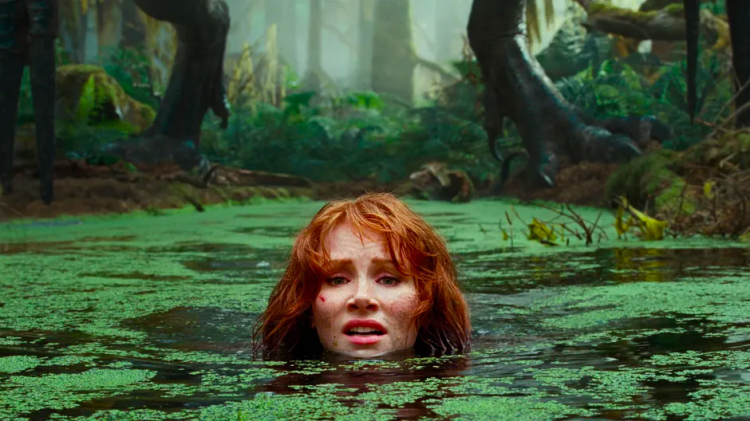
The writers chose to split the film into two storylines: (1) an espionage story with Claire and Owen and (2) an evil corporation plot with Alan Grant and Ellie Sadler. While the espionage storyline is certainly ridiculous, it can actually be entertaining at times, especially since it provides some fun action sequences in the second act (namely with Claire falling from a plane and then trying to hide from a T-Rex). However, the corporation story is utterly boring and disengaging. For one thing, it puts Grant and Sadler in a situation where their skillsets aren’t utilized; instead of dealing with dinosaurs, they’re investigating genetically engineered locusts made by a new new evil science research company. Therefore, we follow protagonists doing things they definitely shouldn’t be doing. Additionally, who cares about giant locusts? People are going to this film for the dinosaur action, and there’s very little of that.

Yet when the dinosaur action does happen, a lot of it isn’t noteworthy. The first act basically has no action at all and instead is more focused on generic setup and exposition, the second act is fine and has some cool action scenes, and then the third act delivers on an atrocious action sequence that’s almost laughable.

Jurassic World Dominion

There’s a common trend in Hollywood in which legacy characters from the older (better) films in a franchise are brought back into newer films to get that juicy nostalgia money. In some rare cases it’s been done respectfully (“Top Gun: Maverick”), but in most cases the old characters are either forgotten about or completely destroyed (Disney’s Star Wars movies). “Jurassic World Dominion” is one of the latter cases. Ellie Sadler and Ian Malcolm are still fine and relatively undamaged, but that’s only because they don’t actually do anything significant. Meanwhile, Alan Grant was treated as a useless comedic relief character being led around by other people. Contrast this with the Alan Grant from “Jurassic Park” who took charge and saved children’s lives, and you have two entirely different people.

Without giving spoilers away, the ending of this film makes the entire movie completely useless. As the story reaches its conclusion, you’ll start to realize that the conflict of dinosaurs being released throughout the world won’t actually be resolved, and instead the only storyline that will be resolved is the locust one.

Jurassic World Dominion

Ultimately, “Jurassic World Dominion” is just another generic modern blockbuster that lacks the soul of the original 1993 film. It’s well made and visually appealing with some of the exciting action sequences you want in a “Jurassic World” movie, but overall it’s a mess that doesn’t justify its existence. That’s its worst sin.

D+

“Jurassic Park” – Classic Film Reviews #21

Jurassic Park

“Jurassic Park” was released in 1993 and directed by Steven Spielberg with a script by Michael Crichton and David Koepp. It starred Sam Neill, Laura Dern, Jeff Goldblum, and Richard Attenborough.

Jurassic Park

After nearly 30 years since its release, what makes “Jurassic Park” remain so enjoyable is that it has all the elements of an intelligent blockbuster that are generally absent from modern big-budget releases. In many ways it represents the last cinematic event of its kind, with a strong focus on character over mindless spectacle, a clever plot that treats its audience like they have an IQ over 20, and a sense of wonder. Wonder in particular is absent from modern entertainment. Movies no longer take time to pause and let the audience calmly take in the visuals and epic concepts, instead rushing us along from generic plot point to generic plot point. No longer do studios find new ideas for major blockbusters. No longer are these massive event films just as good, if not better, than independent movies.

As many critics have pointed out thousands of times, the characters are the true standout of “Jurassic Park.” Whether we’re following Alan Grant as he learns to unwind and bond with children or Ian Malcolm explaining the clear dangers of having a dinosaur amusement park or Ellie Sadler help a sick stegosaurus, these terrific characters make us connect with every scene. We care about them due to their humor, wit, and competence (another thing missing from modern blockbusters), and therefore when the dinosaurs show up, we’re more focused on the characters’ survival than the spectacle. This creates an emotionally resonant and engaging story.

Jurassic Park

The performances in this film are phenomenal. Obviously Jeff Goldblum’s Goldblumisms are on full charming display here, but Sam Neill is also terrific as Alan Grant. He’s perfect at showing the gradual progression of his character as he moves from being a distant, introverted person to a caring father-figure just through his eyes and the shift in the tone of his voice. It’s great to see these actors take such outlandish material so seriously and bring gravitas to the film. I also adore the dialogue of this movie. “Jurassic Park” is packed full of snappy and clever lines, many of which have become some of the most iconic in movie history such as “hold on to your butts,” “must go faster,” and “life finds a way.”

Spielberg’s direction here is on another level of filmmaking. He’s a master of making these wild concepts feel realistic and investing, brilliantly combining the (then) new development of CGI with animatronics. Spielberg and company knew to only use CGI to enrich the practical effects, making for visual effects that largely hold up, save for some shots of dinosaurs running around and some obvious green screen. Whenever dinosaurs are on screen, the camera is positioned in ways that put the audience in the characters’ shoes, making us feel the imposing scale of these powerful creatures. There are plenty of standout action sequences, most notably when the T-Rex attacks Lex and Timmy in the car and when the raptors are hunting them in the kitchen.

Jurassic Park

We need more films like “Jurassic Park” today. The soulless and incompetent blockbuster franchises like the Marvel Cinematic Universe and the Fast & the Furious films are tiresome. We need new big concepts and some actual risk-taking from studios. Hollywood is so bent on keeping the superhero movie-making factory running that I fear it’ll never bring us new concepts from competent writers and directors. I’m terrified that we’ll never get another “Jurassic Park,” “Star Wars,” or “Jaws” ever again. Therefore, “Jurassic Park” remains an incredibly important film in cinema history due to its technical achievements and intelligence. It has its flaws here and there (namely how Ian Malcolm spends the entire third act of the film lying on a table doing nothing), but it’s still a great, rewatchable experience.

A+

“Top Gun: Maverick” Review – A Solid Film & Proper Sequel

Top Gun: Maverick

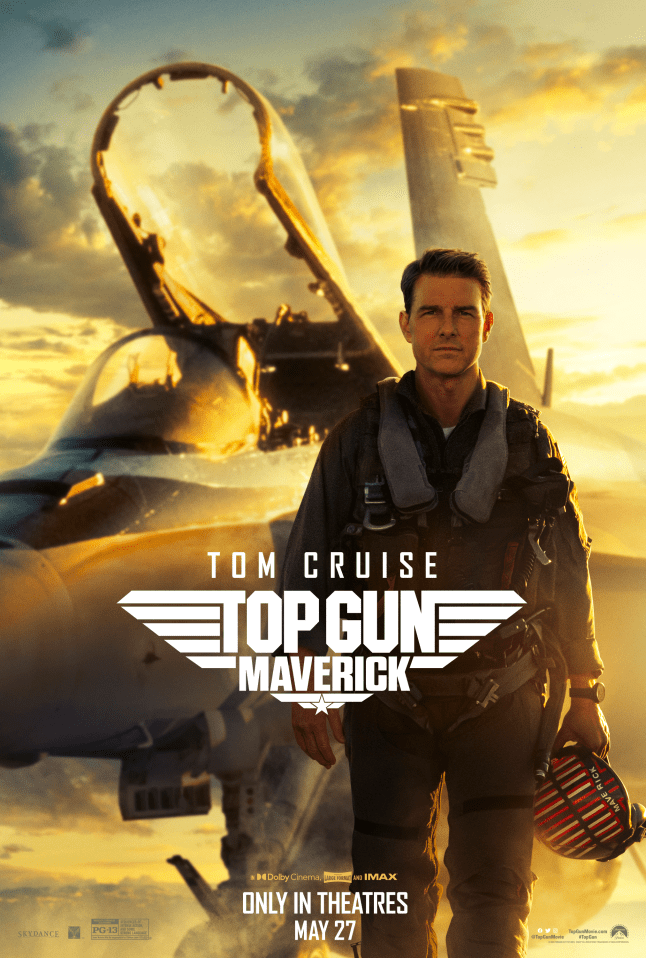
“Top Gun: Maverick” was directed by Joseph Kosinski and stars Tom Cruise returning to his star-making role of the cocky, suave, and highly skilled Navy fighter pilot Pete “Maverick” Mitchell. The film follows Maverick as he teaches a new generation of ambitious pilots at Top Gun and prepares them for a dangerous mission.

Firstly, I want to emphasize that I was never a fan of the original 1986 “Top Gun” movie. I think it’s way too cheesy, choppy, and meandering, with a bland story that comes off as an excuse to make a music video featuring shirtless men rather than a compelling narrative. I think it’s a dated and boring mess, and although I respect the people who love it, I personally can’t find much enjoyment out of that film. However, I found tons of enjoyment out of its far superior sequel.

“Top Gun: Maverick” is up there with “Blade Runner 2049” as one of the best sequels ever made. What I mean by that is the film takes everything people love about the original and improves upon it with better action scenes, performances, and character development. The script is wildly superior to the original, bringing a focused, character-centric narrative which respects the first film and its fans while also entertaining people like myself who either never saw the original or didn’t really care for it. While it’s no masterpiece, it is a terrific example of how to make a proper sequel.

Tom Cruise Top Gun

Tom Cruise has reached legendary status at this point. He truly is the last movie star. In an age of cinema dominated by spectacle-fests and huge comic book movies which attract moviegoers based on the premise rather than on the actors, Tom Cruise’s films are Tom Cruise films. The man is determined to risk his life for our entertainment.

Right before “Top Gun: Maverick” starts, the audience is shown a clip with Tom Cruise thanking them for returning to theaters and dedicating the movie to them. This message perfectly summarizes the intent of Cruise and the rest of the team behind this film that made for such a special sequel: they respected the fans and, more importantly, the character of Maverick. Unfortunately, it’s typical of modern movies to take our beloved protagonists from older films and bring them into worse movies with worse “characters” who completely disrespect them (the most obvious examples being Star Wars and Marvel). What’s so refreshing about this “Top Gun” sequel is that it respects and empowers the protagonist, presenting someone who’s grown to be an even better pilot through additional years of experience. Additionally, most of the supporting characters respect his legacy and are dedicated to helping him or following him. This is how you do these long-delayed sequels, Hollywood.

Top Gun

The fighter jet sequences are mesmerizing. You feel the wind blowing past you, your seat pulsating below you, the G-force pounding your face in. By putting the cameras inside the cockpits with the actors as they fly real F-18s, director Joseph Kosinski makes the viewer feel more involved and endangered. While the common trend of saying “this movie must be seen in a theater” is growing tiresome and is largely false with most films, this is one of those movies which absolutely warrant the theater experience.

Another great aspect of “Top Gun: Maverick” is that it’s actually intelligent. Christopher McQuarrie has essentially become Tom Cruise’s right hand man for the past few years, most notably through his work on the phenomenal previous two Mission: Impossible films. Naturally, he was a great choice to co-write the screenplay, as he knows how to incorporate epic action sequences into a smart narrative which trusts that the viewer has the attention span of an actual human. The film has great character moments in which Maverick is forced to reckon with the death of Goose and the toll it took on him and those around him, as well as a surprisingly emotional use of Val Kilmer as Iceman.

That being said, this film, just like its predecessor, can get overly melodramatic at times. There are moments when you’ll be genuinely invested in the characters but then the scene will go on… and on… and on… and on… and on until you start to become distracted. This was likely a conscious decision by the filmmakers to have a pace similar to that of the original “Top Gun,” but I think that this film was too slick and technically superior for that to work. There’s also a few moments of obvious and unnecessary fan service/member-berries that could be quite distracting.

Top Gun: Maverick

Despite occasionally falling into the traps of the original film’s soap opera storytelling, “Top Gun: Maverick” is vastly superior to the original in every way while still holding its legacy in high regard. This film proves that great sequels can still be made when you have filmmakers who respect the audience and don’t preach to them or tear down their beloved characters.

A-

“Doctor Strange in the Multiverse of Madness” is Maddening

Doctor Strange in the Multiverse of Madness

“Doctor Strange in the Multiverse of Madness” was directed by Sam Raimi and written by Michael Waldron (under the control of Marvel Studios’ producers). The film follows Doctor Strange (Benedict Cumberbatch) as he goes on a trippy adventure with America Chavez (Xochitl Gomez), a teenager with a mysterious power being hunted across the Multiverse by Wanda/Scarlet Witch (Elizabeth Olsen).

I’ll start by saying this: I’m sick and tired of Multiverse content. It worked in “Spider-Man: No Way Home” and “Spider-Man: Into the Spider-Verse” (which we’ll revisit later), but it’s become so tiresome. Like time travel, the concept of a Multiverse is a messy, chaotic one which is used more as a gimmick than a story device in many instances. The trap which this film falls into is the focus on Multiverse spectacle rather than using the concept to tell a compelling story. “Back to the Future” is a terrific film because it used time travel to tell a heartfelt narrative about a teenager who meets with the younger versions of his parents, eventually improving their relationship and the future of their family. That’s profound. But “Doctor Strange 2” just throws everything it possibly can at the screen, desperately trying to entertain the audience but ultimately ends up being exhausting.

ME AFTER WATCHING “DOCTOR STRANGE IN THE MULTIVERSE OF MADNESS”

I want to address the defense every blind Marvel fan is giving this film on the Internet, which is that “It’s the first horror movie of the MCU!” And my response is: okay, so what? Just because a film is in a certain genre doesn’t make it good. That’s like saying “Thunder Force” is the best superhero movie because it’s in the comedy genre. “Thunder Force” is a miserable nightmare, and “Doctor Strange 2” is as well (although to a far lesser degree). Plus, the horror in this film wasn’t all that effective anyway. Due to the PG-13 Mickey Mouse restraints, not much was possible. Zombie makeup, jump-scares, and generic music don’t automatically make it scary. I wasn’t scared once — in fact, I was annoyed, because I know that if Raimi was truly let loose and got that R rating, this film likely would have lived up to the hype.

Speaking of Raimi, another defense of this movie is that “Kevin Feige let Raimi loose!” Yeah, nothing says letting a director loose like slapping him in the face with a PG-13 rating, a choppy script unworthy of his talents, and a mandate of extensive 6-week-reshoots in which 60-80% of the movie was altered.

Doctor Strange

However, that’s not to say that Raimi is perfect. In fact, the film is packed full of moments with utterly misguided direction. There are some truly baffling transitions, obnoxious overuse of cross-dissolves, and a refusal to have actors do another take — many of the scenes come off as rushed first takes sent straight to the editing room floor.

Moving on from the faulty defenses of this movie, let’s discuss the “screenwriting.”

Firstly, Wanda and America Chavez were given ridiculous motivations. Wanda’s motivation is to steal copies of her children (who died in “WandaVision”) from a different universe by crossing through the Multiverse. Firstly, this is a direct rip-off of Kingpin’s motivation in “Spider-Man: Into the Spider-Verse.” Marvel’s getting lazy. Secondly, this is stupidly convoluted. Why doesn’t she just make her children all over again? In “WandaVision,” she created them out of nothing but her unexplained magic red witch powers. Just do that again! Why go through all this trouble of becoming a villain who slaughters people?

Then there’s America Chavez, who can only use her power of traveling through the Multiverse when she’s scared. This is ridiculous. For one thing, there are tons of moments throughout the film when she should be shaking with terror from seeing the atrocities taking place around her, but she doesn’t teleport except for one time early on. Secondly, it’s never explained how scared she needs to be in order to travel to another universe. Does she need to be afraid of deadly situations or could small details like thinking she lost her phone also initiate her power? Additionally, how did she even get this power in the first place? You’d think the writers would explain that, but they never do.

Doctor Strange

All that we’re given to learn about Chavez is a flashback showing when she first used her power, and while I won’t give spoilers away, I will say that the cause of her exhibiting the power is ridiculous and, since she drives the film’s plot, it makes the entire film even more absurd.

Beyond the sloppy character writing, the “script” also has a pacing reminiscent of “Star Wars: The Rise of Skywalker.” Due to the rewrites, reshoots, and editing done by a woodchipper, the film moves so fast in its 2-hour runtime that the story, plot points, exposition, and general character development all fall flat. You don’t have to treat your audience like they have five brain cells. You can write basic character development and put at least some effort into explaining what’s going on. There’s no harm in slowing down either — all stories need downtime.

However, the absolute worst element of this film is the dialogue. With bangers such as “I’m not a monster — I’m a mother” and “Okay book, tell me what to do,” none of the characters feel like actual people. Nobody talks like this. Everyone is spewing out lazy exposition and grueling jokes, so whenever the film actually slows down (which is quite rare), you can’t even enjoy that because you’re distracted by how poorly written the dialogue is.

Doctor Strange

I do want to mention what I actually did enjoy about this film: Elizabeth Olsen. She killed it. Able to shift from menacing to loving in a matter of seconds, her performance became the much-needed heart of the movie. She was given plenty of dramatic moments, allowing her to demonstrate her phenomenal acting talent. Plus, the film had better CGI than the trailers made it seem. While the visual effects weren’t all flawless, most of them were stunning; some of them almost lived up to the mind-blowing visuals of the original “Doctor Strange,” which is a legitimate achievement.

By the end of “Doctor Strange in the Multiverse of Madness,” I wished I had the power of America Chavez so that I could travel to a universe where this “movie” was never made, and instead we got a proper “Doctor Strange” sequel. There are some elements to love in this film, but it was generally a disappointing and maddening experience that’s currently my third or fourth least favorite MCU film.

Marvel Spider-Man 3’d Sam Raimi — again.

D

“Paths of Glory” – Classic Film Reviews #20

“Paths of Glory” was released in 1957 and directed by the filmmaking legend Stanley Kubrick. It starred Kirk Douglas as Colonel Dax and is considered by many critics to be one of the best war films ever made.

The story takes place in World War I, when a self-righteous French military general orders a battalion under the command of Col. Dax (Douglas) to attack the German “Ant Hill” in an impossible suicide mission. After the attack fails, 3 soldiers under Dax’s command are court martialed as scapegoats and Dax must defend them in trial to prevent their demise by the very nation they fought to protect.

What makes this film so effective is its length. At just under 90 minutes, the film moves at a brisk pace and never gives the audience a moment to breathe. The first half is a thrilling war film with one of the best battle scenes in movie history, while the second half is a timeless exploration of morality. The movie explores ideas such as the mistreatment of soldiers/veterans, the hypocrisy in war, and the delusions that accompany great power. “Paths of Glory” is somehow more exciting when it shifts into the compelling courtroom drama as you pray for these 3 innocent men to make it out alive, even though it’s highly unlikely that they’ll be shown mercy.

This is an extremely powerful, moving film that doesn’t fall into the traps of other movies of its era. Soldiers aren’t presented as cartoonish strongmen without any emotions. All the characters are depthful and multi-dimensional. They fear for their lives, question their loyalties, and have insecurities. The psychological horrors of war are at the center of the film’s narrative, and they’re treated with immense respect.

Kirk Douglas gave what is, in my opinion, the best performance of his career in this film. Much of his acting is subtle, but you can see the frustration in his eyes as this man who knows what his government is doing is immoral and repugnant, but also knows that he’s powerless to stop it. When he finally explodes at one of the generals toward the end of the film, it’s so satisfying to see Dax release his hidden rage and frustrations. A lesser actor may have overplayed the role and made Dax into some unrealistically emotional hero, but Douglas knew exactly when to hold back or release his character’s emotions.

Another terrific aspect of “Paths of Glory” is how gorgeously shot it is (which is unsurprising coming from Stanley Kubrick). The scenes in the trenches are mostly done in long takes with dynamic camera movement and symmetry. The battle at the Ant Hill is particularly enthralling, as it contains long stretches of the camera panning from right to left, following the soldiers as they try to progress through the German lines. The practical explosions also add to the grittiness and realism of the battle sequences.

“Paths of Glory” is breathtaking in both its visuals and its themes. This is a thoroughly engaging film that still holds up despite being released 65 years ago, due to its flawless pacing, timeless story, technical achievements, and deeply human performances. While this film is no “Dr. Strangelove,” it’s certainly a great movie that’s among the very best of Kubrick’s filmography.

A+

On Her Majesty’s Secret Service – Classic Film Reviews #19

On Her Majesty's Secret Service

On Her Majesty’s Secret Service, released in 1969, was directed by Peter Hunt and was the first (and last) James Bond film starring George Lazenby as 007. It follows Bond on his continued mission to find and defeat Blofeld (played by Telly Savalas) in the Swiss Alps while falling in love with Tracy Di Vicenzo (played by Diana Rigg). The film was initially received with lukewarm reactions by fans when it was first released, but over 50 years later many people consider it to be one of, if not the best 007 adventure yet.

On Her Majesty's Secret Service

There’s a lot of people who like to hate on Lazenby since he never had any acting experience before doing this film and criticize him for giving a bland performance, but I actually really enjoy Lazenby’s Bond. Is he as good as Sean Connery? No, of course not, but that’s not a fair standard to put on every other actor who plays Bond (although Lazenby’s certainly a million times better than Roger Moore). I still thought Lazenby was extremely charismatic and charming, but the best part of his performance has to be the physicality he brought to the role. While Connery had a few violent moments during his tenure and definitely felt like a cold-blooded assassin, his Bond never really got into the mud. In contrast, Lazenby’s Bond felt like a brawler who could take down 10 guys at once. Lazenby knew going in that he didn’t have the acting chops, so he made up for that by doing most of his own stunts, giving us a more brutal Bond.

On Her Majesty's Secret Service

Speaking of the brutality, the action sequences in On Her Majesty’s Secret Service feel like they could’ve been made today. They’re fast, smartly edited, and well choreographed. In just the first 5 minutes of the film, director Peter Hunt established that this is an action-packed, slick James Bond flick. He put his own stamp on the franchise at a time when action movies were shot with little style and consisted of flat wide shots or close-ups with people pushing each other around awkwardly. The film’s also gorgeously shot, especially during the jaw-dropping snow chase sequences. Essentially, On Her Majesty’s Secret Service feels like a precursor to modern filmmaking.

On Her Majesty's Secret Service

The performances by the supporting actors also enhance the film. Diana Rigg as Tracy was an incredibly likeable Bond girl, not only because she was stunning and witty, but also because she had a significant role in the plot & action scenes. The driving force of the film is Tracy’s effect on Bond, breaking down his hardened shell and changing him into a more open individual who marries her. To have the audience buy this, you need a great actress, and Rigg succeeded with flying colors, making it all the more devastating when she’s killed at the end of the film. Telly Savalas was also terrific in the film and he’s easily my favorite Blofeld. He’s a lot more grounded, calm, and collected than Donald Pleasence’s Blofeld. While he has the white cat, secret lair, and an army of goons, Savalas’ Blofeld still feels like a real threat. Savalas’ performance is incredibly fleshed out (even the way he holds is cigarette is unique), making for an erie and fully realized antagonist.

My main issue with On Her Majesty’s Secret Service is that it’s too long and has a second half which is far stronger than its first half. The movie is a whopping 2 hours and 22 minutes long, and I just don’t see why it had to be that length. The film never gets particularly boring, but it definitely overstays its welcome. Twenty minutes easily could have been cut out of the first half to make the pacing quicker without sacrificing any plot details. There’s a bunch of lingering shots of the vistas and an overabundance of scenes between Bond and Blofeld’s female assassins. Whenever Bond wasn’t with Tracy or Blofeld, you can tell that the script was a bit weaker and didn’t know how to maintain the intrigue. That said, once you get to that second half, the film grabs you and doesn’t let go. As soon as the riveting 25 minute action sequence in which Bond escapes Blofeld’s lair starts, the movie just skyrockets, as it makes full use of the gorgeous landscapes, Hunt’s visual skills, and Lazenby’s physicality.

On Her Majesty's Secret Service

Ultimately, On Her Majesty’s Secret Service is a solid 007 film that’s unique because of its style, emotional stakes, and character development of James Bond — not because it was the only film starring George Lazenby. While I don’t think it’s the masterpiece many critics make it out to be, I still like the film quite a bit and it’s one of my favorite Bond adventures.

A-

Click Here for My Review of No Time to Die

2022 Oscars – All Best Picture Nominees Ranked

The Oscar: an award which means a lot less each year because of the unbearable preaching of the Academy Awards ceremony itself, and the fact that the Best Picture award almost always goes to the wrong film. Since I’m clearly such a big fan of the Oscars, it’s time to rank the 2022 Best Picture nominees from worst to best!

10. Don’t Look Up

I hate that the posters for this disgusting film will now say “nominated for Best Picture.” Don’t Look Up is utter garbage that doesn’t even deserve to be considered a motion picture. This is just a propaganda piece made to inflate the egos of writer/director Adam MacKay and the Hollywood elite. The movie marketed itself as an allegory for climate change, and while I normally despise politics being thrown into movies, I wasn’t that offended by this specific topic since it’s not nearly as controversial as many others being injected into cinema today. However, this movie was barely about climate change at all; it’s just a film attacking people on the Right. The message of the movie is basically that Republicans are all foolish and lack common sense. While I don’t associate myself with either side of the political spectrum, I still think it’s incredibly offensive to just denounce half of the United States population. The film is also incredibly stupid; I get it’s supposed to be a comedy, but I don’t buy for a second that the entire world population would be in disbelief of a giant meteor hurtling toward Earth when there’s clear evidence — not to mention that they can actually see it in the sky later on in the movie. Don’t Look Up is devoid of any humor, intelligence, or heart. This is a disgusting product made by a fake filmmaker who has once again proven his immaturity and incompetence. MacKay is arguably the worst director in Hollywood right now, as he symbolizes everything wrong with the industry. He’s self-righteous, arrogant, and only cares about patting himself on the back. The point of cinema is to provide the public with escapist entertainment with powerful themes and some sort of excitement. MacKay couldn’t care less about doing that.

9. The Power of the Dog

The Power of the Dog Best Picture

Although The Power of the Dog is the most likely nominee to win the Best Picture Oscar, it’s easily one of the worst. Now, it looks like The Godfather compared to Don’t Look Up, but that’s not hard to do. This movie is incredibly pretentious, mainly because of its intentionally slow pace. The film is such a vicious slog to get through, especially in the first act, which is almost unbearable. I had to stop watching 30 minutes in and was only able to power through it in one sitting about 2 weeks later. Most of the characters are highly uninteresting, and that’s a major issue when you have a film entirely built on the exploration of themes through the eyes of your 4 central characters. I thought Benedict Cumberbatch was horribly miscast in the lead role of Phil Burbank. He couldn’t do a Southern accent to save his life and his mannerisms simply didn’t match the evil, gross character he was playing. However, I did love Rose, played brilliantly by Kirsten Dunst; she might have given my favorite performance by an actress of 2021, which is why she probably won’t win the Oscar. The most interesting concept of the film is that a woman married into a new household must live with her demon of a brother-in-law, who psychologically tortures her to the point where he makes her almost terminally ill. If the film was just about that relationship, it would skyrocket toward the top 5 films on this list. Unfortunately, since that’s just one plotpoint which is only truly explored for 20 minutes, it’s never given room to breathe. Instead, we get long, tedious scenes about ranching and playing the piano. I think Jane Campion (who seems like a self-righteous snake in real life, by the way) did a mediocre job directing the film. She’s a decent director of actors and the film looked pleasant, but her slow-paced style of stretching out a narrative that leads nowhere is aggravating. I found The Power of the Dog to be an obnoxiously pretentious, aimless film with themes that weren’t nearly profound enough to justify its aggressively boring pacing. Therefore, it’s perfect for a Best Picture win.

8. West Side Story (2021)

West Side Story Best Picture

Yes, I know all the other critics are calling this “stunning” or “a triumph,” but I just can’t. Steven Spielberg is easily my favorite director of all time, so it pains me to say that this remake of a Romeo & Juliet ripoff didn’t work for me. It’s certainly not bad; it’s just mediocre. I’m personally not into musicals, but if you can give me great songs or a great story, I can overlook the distractions of people breaking out into song. Starting positively, this movie is gorgeous. The set design, lighting, costuming, and the breathtaking cinematography are all immaculate. I also thought that the dancing was strong and Ariana DeBose gave an incredibly charming & human performance as Anita. The other performers also were great at balancing the trifecta of acting, signing, and dancing. Unfortunately, the movie still has the same ridiculous plot of Romeo & Juliet, in which two people who just met immediately fall in love and are willing to die for each other over the course of only two days. Also over the course of two days, a massive gang war occurs. There’s simply no excuse for how unrealistic this is; it doesn’t matter if it’s based on prior material. Also, in my opinion, the only truly memorable and catchy song in this 2 ½ hour movie is “America.” Ultimately, this is an unnecessary remake of an already flawed film, neither of which deserved the Best Picture nomination in my opinion.

7. Belfast

Belfast Best Picture

Belfast is one of those movies you watch only once and say to yourself, “that was fine, but I’m probably never going to see it again.” This is very much an autobiography of the film’s writer/director Kenneth Branagh, specifically his childhood during the chaotic Northern Ireland of the late 1960s, and that’s both a good thing and a bad thing. The film’s dilemma is that its first 55 minutes are largely unremarkable. Nothing much happens and the characters aren’t really given that much to do. There aren’t any major events, arcs, or memorable moments; this section of the film is more of a time capsule into a time period and location which isn’t all that interesting or unique. However, the film really picks up in its final 45 minutes, when the characters actually start growing and the turmoil explodes into a massive climax. This is when the characters start to learn from each other and develop deeper bonds, leading to a heartbreaking yet hopeful ending. Something that this film absolutely nailed throughout the entire runtime was making the 7-year-old main character Buddy charming and likable. Normally, young children in movies are unbearably annoying, largely because they’re played by horrendous child actors. It’s incredibly rare when a child actor is actually decent, and luckily, Jude Hill was exceptional. He was not only adorable, but he also did a great job of balancing his own personality while also acting as the audience’s point of view. He was incredible. The other performances were also terrific as well. Buddy’s relationships with his family felt realistic, heartfelt, and deeply personal, which is the main reason why I didn’t find the first 60% of the film all that boring. Belfast is a decent film that’s charming enough to pass the time, but it’s also Oscar bait which I don’t have the urge to rewatch.

6. King Richard

King Richard Best Picture

Speaking of Oscar bait, we have King Richard. Despite 100% being designed for Will Smith to win an Academy Award, this is still a highly enjoyable and engaging movie. The movie follows Richard Williams, the father of the world-famous tennis players Venus & Serena Williams, a man entirely devoted to making his children the best of the best of the best. This is a film about addiction to success and greatness, and it raises the question of how far a parent can push his/her child before it goes too far, and that’s actually really fascinating. Will Smith gave the best performance of the year as the title character, changing his voice, mannerisms, and movements all to embody this deeply flawed but endearing father. While this is definitely a movie made to stroke the William sisters’ egos, it works well as a family drama and doesn’t glorify its central character to a ridiculous degree.

5. Drive My Car

I think this film accomplished what The Power of the Dog was trying to do. It’s a slow-paced drama interested in exploring characters and themes rather than a sprawling story. The difference between the two films, however, is that Drive My Car has interesting characters, better pacing, and justification for its length, while The Power of the Dog is just pretentious. Drive My Car is almost comically long, as its opening credits don’t start until 40 minutes into the 3-hour-runtime, but its length is part of its charm. One of the themes of this film is how slow life can feel when you’re unfulfilled, as the main character is a man whose wife died after cheating on him and he can’t get over it. After the first 40 minutes when we see him with his wife before she passed, he’s a damaged, quiet, and distant person who has trouble forming relationships with people. His life has become tedious without his wife, and when he meets his new driver, he finally forms an actual connection with someone and is able to move on from his past. The movie actually uses its runtime to explore the central character as much as possible (he’s literally in every single scene), and since he’s so well realized, it doesn’t feel boring at all — at least not to me. This film isn’t going to be for everyone and I don’t think it’s very rewatchable, but I still found it to be extremely compelling and deeply emotional. On a side note, I appreciate that the Academy is starting to consistently nominate foreign films for Best Picture every year.

4. Nightmare Alley

Going into Nightmare Alley, I thought I wasn’t going to like it. It’s a remake with mixed reviews and a director whose filmography I’m not all that familiar with. However, I was pleasantly surprised by how good the movie turned out to be. It’s a psychological thriller about a man named Stan Carlisle whose only motivation in life is to become rich and powerful; the film follows his rise and fall in the world of show business. Bradley Cooper was spectacular in the role, as was the rest of the cast. The film is also directed brilliantly by Guillermo Del Toro, whose previous film The Shape of Water won Best Picture at the 2018 Academy Awards. The camera is constantly moving throughout every single scene, making the film uneasy, disturbing, and almost sickening at times. The movie is cleverly split into two parts, so you can see his humble beginnings as a carnie in the first half and his battle for affluence in the second half. Overall, Nightmare Alley is an extremely creative film with an impressive cast, unique direction/cinematography, and a perfect, mindblowing ending.

3. Licorice Pizza

Licorice Pizza Best Picture

Paul Thomas Anderson’s love letter to the free-spirited times of the 1970s is one of my absolute favorite movies of the year. It’s funny, suspenseful, tragic, and epic all at the same time. The relationship between our two leads is incredibly heartfelt and both actors were terrific in the film. They shared instant chemistry with each other and improved upon Anderson’s already phenomenal script. Speaking of the script, Licorice Pizza has the best dialogue I’ve seen in any recent film since The Social Network. It’s that good. The first 5-10 minutes of the film is one long extended dialogue sequence between the two main characters which tells the audience everything we need to know about their personalities, passions, and goals for the future. The movie is a ton of fun and Anderson’s best work since There Will Be Blood, another Best Picture nominee. My only significant gripe with the film is its strange title, which is never explained during the entire movie.

2. CODA

CODA Best Picture

CODA is likely the most mainstream, widely-appealing film on this list, but that’s why I like it so much. This is a sweet, charming, and heartwarming coming-of-age story about a high schooler named Ruby struggling to balance her ambitions for the future with the needs of her hearing-impaired family. The movie is incredibly tasteful, as it respects deaf people and doesn’t make them cartoonish. The entire cast is perfect, especially Troy Kotsur as Ruby’s father Brady. Despite the seemingly dour situation this family is in, the movie is always hopeful and lighthearted due to its wonderful sense of humor, witty script, and chemistry along the cast. I thoroughly enjoyed this film, and it’s refreshing to see such an uplifting movie during these hard times.

1. Dune

Dune is one of the greatest films of the 21st century. It has impeccable direction, an all-star cast, great characters, a timeless story, and some of the best visuals in cinematic history. This is the type of movie that isn’t really made today. It isn’t filled with bad jokes, mindless action sequences, or social justice messaging; it’s a film made by fans of the source material that want to spread their love for it onto the audience. It treats the audience like intelligent adults, which unfortunately is rare in movies today. This is an immersive, one of a kind experience with mindblowing visuals that make your jaw drop. It’s the perfect demonstration of what cinema can do, and it gets better every time I watch it. I think it will eventually be recognized as this generation’s Star Wars or Lord of the Rings. It’s a crime that Denis Villeneuve wasn’t even nominated for Best Director, and, unfortunately, I sincerely doubt that this will win Best Picture — it’s way too good for the Academy. But I do know that in 50 years, Dune will be remembered as a classic and taught in film schools around the world, while most other films on this list will be forgotten.

Click on these links to read my reviews of Best Picture nominees Dune, Licorice Pizza, and King Richard.